
TL;DR:
- Neglected mobile apps pose significant risks through crashes, security vulnerabilities, and compliance issues, leading to costly damages. Continuous maintenance—including bug fixes, updates, and security reviews—is essential for app reliability, security, and long-term business value. Treating app upkeep as a strategic investment safeguards brand reputation, customer trust, and competitive positioning.
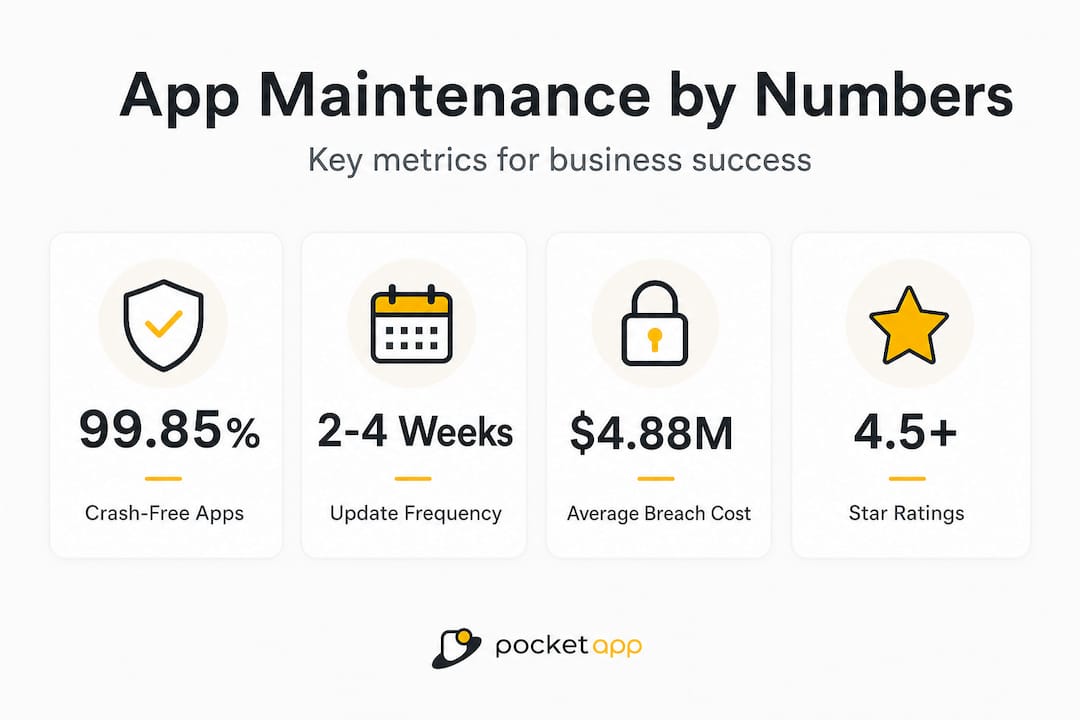
A neglected mobile app is a liability hiding in plain sight. The moment your app starts crashing on a new Android version, falls foul of a GDPR update, or loses customers because a third-party payment SDK quietly breaks, the cost becomes very real, very fast. Data breaches average $4.88M in total damage, and that figure does not account for the reputational fallout with the loyal users you spent years acquiring. For UK businesses that rely on mobile apps to engage customers, streamline operations, or generate revenue, understanding app maintenance is not optional. This guide covers what it involves, where the real risks lie, and how to treat it as a long-term business investment.
Table of Contents
- What is app maintenance and why does it matter?
- Core pillars of app maintenance: what every business must cover
- App maintenance challenges: the reality behind the scenes
- The role of security and compliance in app maintenance
- Why app maintenance is as much a strategic investment as a technical one
- Partnering with experts for efficient app maintenance
- Frequently asked questions
Key Takeaways
| Point | Details |
|---|---|
| Essential for business | Ongoing app maintenance safeguards your business from costly downtime and reputational damage. |
| Covers multiple areas | App maintenance includes technical fixes, security patches, compliance checks, and feature updates. |
| Reduces major risks | Regular updates dramatically lower the risk of breaches and sudden platform compatibility issues. |
| Frameworks enable action | Using a maintenance framework helps UK businesses stay proactive and organised. |
| Strategic advantage | Treating app maintenance as an investment supports long-term growth and trust with users. |
What is app maintenance and why does it matter?
Many organisations make the mistake of treating app development as a one-off project. You build it, launch it, and move on. The reality is far more demanding. App maintenance refers to all the ongoing work that happens after launch: bug fixes, performance monitoring, security patches, OS compatibility updates, and feature enhancements. It is a continuous process, not a safety net you call upon in emergencies.
Think of your app the way you think about a high-street premises. You would not open a shop, install the fixtures, and then never clean the windows, replace broken equipment, or update the signage. The digital environment shifts constantly, and an app that does not shift with it quickly becomes unreliable, insecure, and frustrating to use.
"Treating post-launch maintenance as optional is one of the most expensive misconceptions in mobile product strategy. By the time problems surface publicly, the damage is already done."
The business risks of skipping maintenance are significant. Stability suffers when underlying frameworks change. Compliance gaps open up as regulations evolve. Performance degrades as device ecosystems diversify. App maintenance issues stem from sources as varied as Android process death, third-party SDK deprecations, and device fragmentation, many of which are invisible until they cause real harm in production.
Understanding the app lifespan explained helps clarify why maintenance is a structural necessity rather than a reactive scramble. Without it, even well-built apps accumulate technical debt, age poorly, and ultimately fail to deliver the return on investment your business expects.
Common misconceptions worth dispelling:
- "We only need maintenance when something breaks" — reactive maintenance is always more expensive than proactive care
- "Our app was built recently, so it should be fine" — OS updates and SDK changes can break even brand-new apps within months
- "Maintenance is just for fixing bugs" — it also covers performance tuning, security hardening, and adding incremental improvements
- "Our internal team can handle it ad hoc" — without a structured maintenance programme, critical updates often fall through the gaps
Core pillars of app maintenance: what every business must cover
Now that we understand the definition, it is useful to break app maintenance into its four core categories. This framework helps business leaders ask sharper questions, allocate budgets more accurately, and have more productive conversations with their development partners.
| Maintenance type | What it means | When it is needed | Business impact |
|---|---|---|---|
| Corrective | Fixing bugs and errors that affect functionality | After bug reports or crashes emerge | Directly protects user experience and retention |
| Adaptive | Updating app to work with new OS, devices, or APIs | After Apple/Google release updates | Prevents app from becoming unusable on new platforms |
| Preventive | Refactoring code and updating dependencies proactively | On a regular schedule, before problems arise | Reduces long-term costs and technical debt |
| Perfective | Adding new features or improving existing ones | Based on user feedback or product roadmap | Drives growth, engagement, and competitive positioning |
Each category serves a distinct function and requires dedicated attention. Corrective maintenance is the most visible because users feel bugs directly. But preventive and adaptive maintenance are arguably more important, because they stop problems from ever reaching your users in the first place.
Pro Tip: Schedule adaptive maintenance reviews ahead of major iOS and Android release cycles, which typically happen in late summer and autumn each year. If your development team is already prepared when the new OS drops publicly, you stay ahead of the disruption rather than scrambling to catch up.
Practical checklist for UK organisations:
- Review third-party SDK and library versions at least quarterly
- Test against the latest iOS and Android beta releases before public launch
- Monitor crash rates and ANR (Application Not Responding) rates using analytics tools
- Audit security dependencies and SSL/TLS certificate expiry every six months
- Collect structured user feedback and triage feature requests monthly
- Review app store listing requirements and policy changes each quarter
- Conduct performance profiling, particularly on lower-end devices popular in your target demographic
Apps rated over 4.5 stars maintain crash-free rates at approximately 99.85%, which is a direct reflection of disciplined, ongoing maintenance. That is not a coincidence. The best-performing apps in competitive categories share a common commitment to regular, structured upkeep.
Establishing a robust update rhythm is key. Guidance on the importance of regular app updates and knowing how often to update your app are practical starting points for building a sustainable programme.
App maintenance challenges: the reality behind the scenes
Understanding the framework of maintenance is useful, but real-world challenges make proactive management necessary, not optional. The mobile landscape is extraordinarily fragmented, and the surface area for potential failure is far larger than most business leaders realise.
Consider Android alone. At any given moment, there are thousands of distinct device models running different OS versions, with custom manufacturer interfaces layered on top. What performs flawlessly on a Samsung Galaxy flagship can behave very differently on a budget Xiaomi handset or an older Motorola running a heavily modified Android skin.
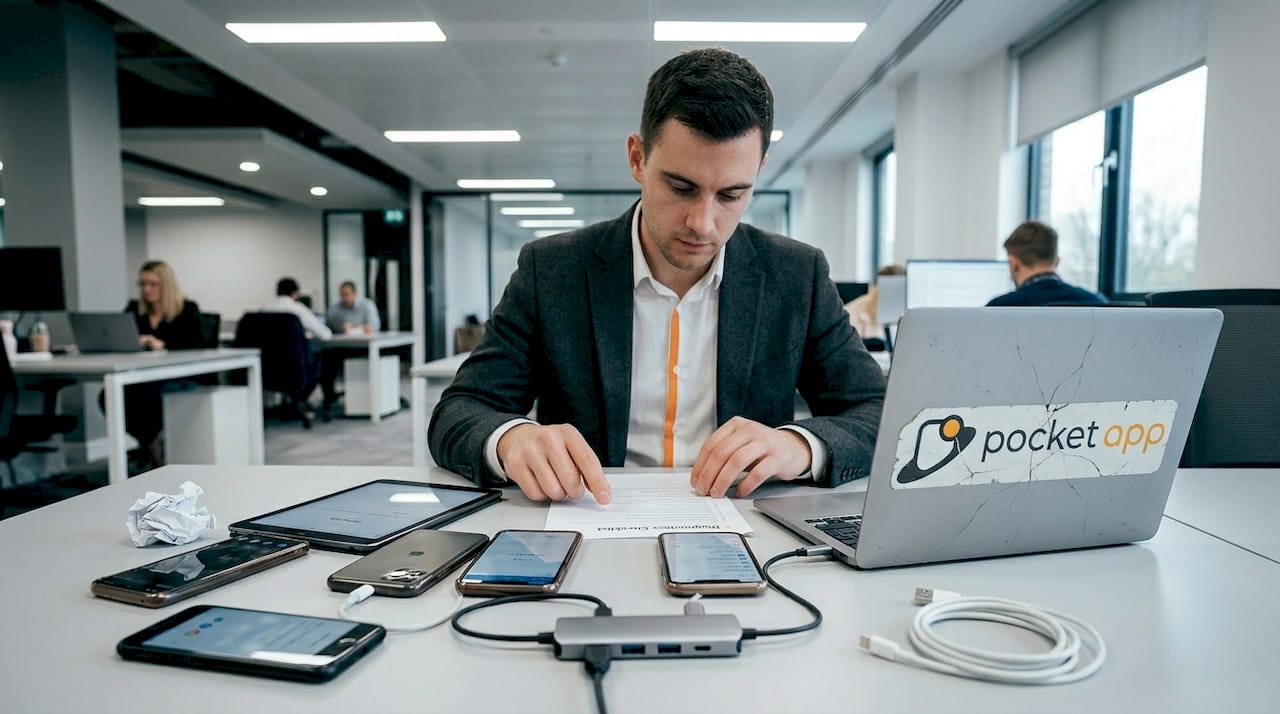
OEM-specific behaviours and dependency volatility can break live apps without warning, often in ways that only manifest on specific hardware combinations or under particular usage conditions. This is not a theoretical risk. It happens routinely to production apps across every industry.
| Challenge area | Typical impact | Maintenance response |
|---|---|---|
| Device fragmentation | UI inconsistencies, crashes on specific models | Automated testing across device matrix |
| OS version changes | Deprecated APIs, background process limits | Adaptive updates ahead of OS releases |
| Third-party SDK changes | Feature breakage, security vulnerabilities | Regular dependency audits and version pinning |
| App store policy shifts | App rejection or removal from store | Compliance monitoring and policy reviews |
| Performance degradation | Slower load times, higher battery drain | Regular profiling and code optimisation |
The key challenge categories businesses should actively monitor include:
- Device fragmentation: Screen sizes, hardware capabilities, and manufacturer customisations create unpredictable edge cases
- OS updates: Both Apple and Google release major updates annually, often deprecating APIs your app relies upon
- Third-party SDKs: Analytics, payment, mapping, and authentication libraries change independently of your app, and a single breaking change in a dependency can take down critical functionality
- App store policies: Policy violations can lead to removal from the App Store or Google Play, cutting off your user base entirely
Reviewing app development tips that anticipate these challenges from the build phase helps significantly, but maintenance is where those insights get put into consistent practice over time.
The role of security and compliance in app maintenance
Technical challenges aside, perhaps the biggest and costliest risk of neglect emerges in the areas of security and regulatory compliance. Security is not a feature you build once. It is a continuous practice, and the consequences of getting it wrong extend far beyond a negative app review.
Data breaches cost businesses an average of $4.88 million per incident, encompassing legal costs, regulatory fines, customer remediation, and reputational damage. For UK businesses handling personal data, GDPR obligations make security maintenance a legal requirement, not just good practice. A vulnerability left unpatched in a mobile app can expose user data, trigger ICO investigations, and result in substantial financial penalties.
Security essentials that every UK organisation should review routinely:
- Authentication mechanisms: Ensure token expiry, session management, and login flows meet current best practices
- Data encryption: Verify that data in transit uses TLS 1.3 and data at rest is encrypted appropriately
- API security: Review API endpoints for exposed keys, overly permissive access, and injection vulnerabilities
- Third-party library audits: Check known vulnerability databases (such as the National Vulnerability Database) for any libraries your app depends upon
- Certificate pinning: Ensure SSL certificates are renewed and pinning logic is kept up to date
- Privacy policy compliance: Review data handling disclosures against current GDPR guidance and ICO recommendations
Pro Tip: Build a rapid patch response process into your maintenance contract before you need it. Define in advance what qualifies as a critical security issue, agree on a maximum response time, and ensure your development partner can deploy a hotfix without needing lengthy sign-off cycles.
GDPR compliance alone requires that businesses can demonstrate accountability over how personal data is collected, stored, and deleted via their app. Without active maintenance, data retention policies become stale, permissions drift, and third-party integrations accumulate liabilities without your knowledge.
Our detailed guidance on mobile app security best practices provides a practical starting point, while understanding app data protection and data privacy best practices ensures your compliance posture holds up as regulations evolve.
Why app maintenance is as much a strategic investment as a technical one
Here is where most conversations about app maintenance go wrong. The discussion stays in the technical domain, framed around cost and resource, and business leaders start thinking about it as overhead. That framing is damaging and, frankly, inaccurate.
Consider what your app actually represents. It is often the primary touchpoint between your organisation and your customers. It carries your brand, holds your users' data, and delivers the experiences that determine whether people stay loyal or switch to a competitor. Every time your app crashes, loads slowly, or fails to work on a new device, that is a direct hit to your brand's credibility.
The most commercially successful apps are not necessarily the most technically sophisticated at launch. They are the ones whose owners treat the post-launch phase as seriously as the build phase. A rigorous maintenance programme signals to users that their experience matters. Consistent updates, prompt bug fixes, and proactive performance improvements build the kind of trust that translates into retention, positive reviews, and organic growth.
Short-term cost savings from cutting maintenance budgets are illusory. Every month you delay addressing technical debt, the cost of resolving it compounds. A dependency update that takes two days to implement today might take two weeks in a year's time once it has cascaded across your codebase. And that is before considering the commercial cost of a significant outage or a publicised security incident.
There is also a competitive dimension that organisations often overlook. If your app degrades while a competitor's improves, you lose market position quietly, incrementally, and very hard to recover. The value of app longevity is not just technical. It is a business strategy for protecting and growing what you have already built.
Treat maintenance as a business capability, not a cost centre. Budget for it deliberately, review it quarterly alongside your commercial KPIs, and hold your development partner accountable for measurable outcomes such as crash rates, update frequency, and response times to critical issues.
Partnering with experts for efficient app maintenance
Maintenance becomes exponentially more effective when you are working with a team that understands not only the technical landscape but also the commercial goals driving your app.
At Pocket App, we bring over 300 projects of hard-won experience to every maintenance engagement. We understand that your app is a business asset requiring structured, ongoing care. Whether you need adaptive updates to stay ahead of iOS and Android changes, security reviews aligned with GDPR obligations, or perfective improvements that keep users engaged, our team has the depth to deliver. Our work in professional app development and business app development means we approach maintenance strategically, connecting every technical decision back to your commercial objectives. Get in touch to discuss a tailored maintenance programme for your app.
Frequently asked questions
How often should business apps be maintained?
Most business apps require minor updates every two to four weeks and larger reviews or feature updates every quarter, though this depends on app complexity and the pace of platform changes.
Can app maintenance reduce the risk of costly data breaches?
Yes, regular maintenance addresses security flaws quickly, helping avoid breaches averaging $4.88M in damage, which is a compelling financial argument for consistent investment.
What are common issues that require app maintenance?
Frequent issues include outdated third-party software, unsupported device configurations, bugs triggered by new OS versions, and SDK deprecations that silently break core functionality.
Is app maintenance only technical, or does it involve security and compliance?
App maintenance covers technical, security, and legal dimensions, ensuring the app remains compliant with regulations such as GDPR and aligned with current industry standards for data protection.
Recommended
- User experience optimisation guide: boost mobile app engagement
- Why app performance matters: boost engagement and efficiency
- How to improve app UX: a step-by-step guide for retention
- Pocket App | Updating for Success: How Often Should You Update a Successful App and When Are the Best Moments to Do This?