TL;DR:
- UK adults made 67.8 million repeat prescription orders via the NHS App in a year, highlighting digital shift in healthcare. The NHS App is a key digital platform improving operational efficiency and patient engagement but faces challenges related to digital inequality. Effective health apps should embed behavior change techniques, prioritize accessibility, and involve continuous feedback for lasting impact.
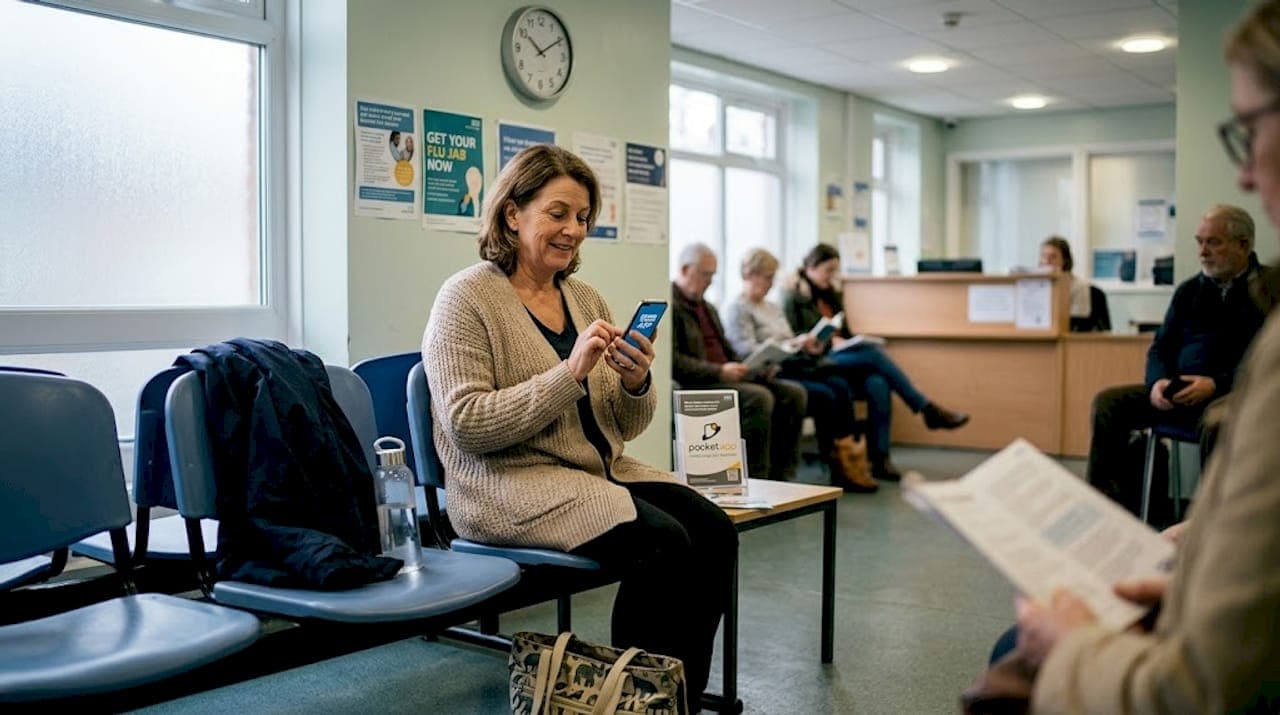
UK adults placed 67.8 million repeat prescription orders through the NHS App in a single year. That figure is remarkable not just for its scale, but for what it tells us about the irreversible shift underway in how patients and providers interact. Yet raw adoption numbers can mask an uneven reality. Not every patient benefits equally, not every trust has the infrastructure to support sustained engagement, and not every app fulfils its clinical promise. This guide takes a clear-eyed look at the evidence, the operational opportunities, and the genuine challenges facing NHS and private healthcare leaders who are weighing mobile app investment in 2026.
Table of Contents
- Setting the scene: Mobile apps' evolving role in the NHS
- Driving patient engagement and behaviour change
- Operational efficiency: Integration and workflow transformation
- Equity, inclusivity, and the digital divide
- Why true success means bridging gaps, not just driving adoption
- How to take the next step in healthcare app development
- Frequently asked questions
Key Takeaways
| Point | Details |
|---|---|
| Widespread adoption | NHS App now serves millions, powering everyday patient interactions and service delivery. |
| Proven engagement | UK health apps drive sustained behaviour change and offer real operational efficiency when well-integrated. |
| Accessibility must | Addressing the digital divide is critical so benefits do not bypass at-risk populations. |
| Organisation support | Successful adoption requires not just technology but clear organisational backing and ongoing adaptation. |
Setting the scene: Mobile apps' evolving role in the NHS
The NHS App is arguably the most significant digital infrastructure project in UK healthcare history. With over 39 million registered users, it has become the primary digital touchpoint between patients and the health service, handling everything from appointment bookings to secure access to GP records. The pace of growth has been extraordinary, with user numbers doubling within two years of the app's major redesign.
To understand why this matters operationally, consider the core transactions the app enables:
- Appointment booking and cancellation directly with GP practices
- Repeat prescription ordering without calling a surgery
- Access to medical records, test results, and clinical correspondence
- 111 online triage integrated into a single interface
- Organ donation registration and NHS volunteer referrals
These features are not cosmetic. Each self-service transaction represents a call that a receptionist no longer needs to handle, a letter that no longer needs printing, and a patient who feels more in control of their own care. The operational logic is compelling.
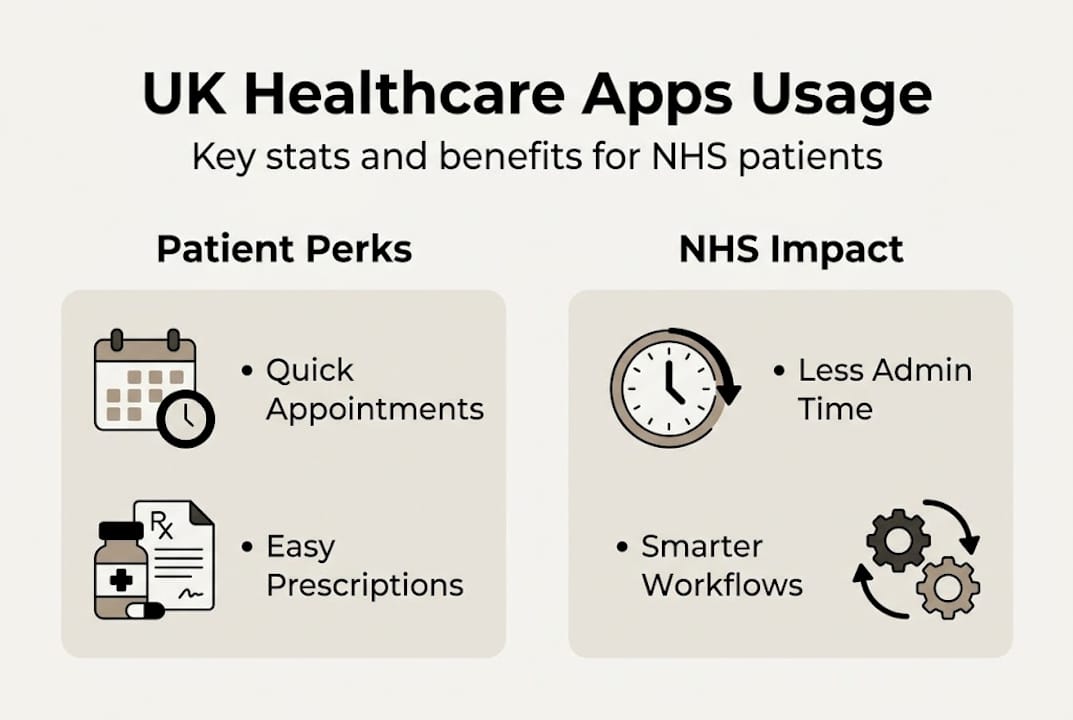
| Feature | Patient benefit | Operational benefit |
|---|---|---|
| Repeat prescriptions | Convenience, no hold times | Fewer inbound calls |
| Appointment booking | 24/7 access | Reduced admin workload |
| Record access | Informed self-management | Less duplication of notes |
| 111 online | Faster triage | Reduced A&E pressure |
For healthcare leaders exploring apps in the healthcare sector, the NHS App provides a working blueprint of what scaled adoption looks like. But it also reveals the gap between what an app offers and what a given population can reliably access.
The broader picture of digital healthcare transformation shows that the NHS App is part of a wider ecosystem. Condition-specific apps, mental health tools, and remote monitoring platforms are all part of this health apps revolution. The opportunity for trusts and integrated care boards is real, but only when deployments are underpinned by robust user research and genuine clinical integration.
Driving patient engagement and behaviour change
Download numbers tell you very little about actual impact. The more pressing question for any healthcare decision-maker is whether mobile apps change what patients do and whether those changes improve outcomes.
The evidence from well-designed interventions is encouraging. Users of the Active 10 app increased brisk walking by an average of 9 minutes per day, a meaningful shift given that physical inactivity costs the NHS an estimated £1 billion annually. Crucially, the effect was sustained above baseline with continued use, suggesting that well-designed apps can move people beyond short-term novelty.
Why do some apps succeed where others stall? The answer lies in how they are built. Effective health apps incorporate established behaviour change techniques:
- Goal-setting that is specific and patient-defined
- Self-monitoring through activity logs, symptom trackers, or mood diaries
- Feedback loops that respond to progress and adjust prompts accordingly
- Social support features such as shared progress or community boards
- Timely reminders that are contextually relevant rather than generic
The NHS App supports goal-setting and self-monitoring as core engagement features, embedding these techniques into routine interactions rather than positioning them as optional extras. This integration is what separates a clinical tool from a wellness novelty.
| App type | Primary mechanism | Evidence strength |
|---|---|---|
| Walking/activity apps | Self-monitoring, reminders | Strong (RCT data) |
| Medication adherence | Alerts, tracking | Moderate |
| Mental health apps | CBT modules, journalling | Moderate to strong |
| Chronic disease management | Data sharing, feedback | Emerging |
For leaders working to overcome healthcare challenges at scale, the lesson is clear: feature richness matters less than behavioural architecture. An app that nudges patients at the right moment, with the right message, will consistently outperform one that simply displays information.
Pro Tip: When evaluating any health app for deployment, ask vendors to demonstrate which specific behaviour change techniques are coded into the user journey, not just listed in a marketing deck. If they cannot map features to a recognised framework, treat that as a red flag.
The evolution of fitness apps from simple step counters to personalised health coaches shows how far the technology has come, and how much further clinical apps can still travel when genuine expertise guides the design.
Operational efficiency: Integration and workflow transformation
Patient-facing benefits are only half the story. The operational case for mobile apps rests on what happens behind the scenes, specifically how they connect with existing clinical systems and reshape the workload on NHS staff.
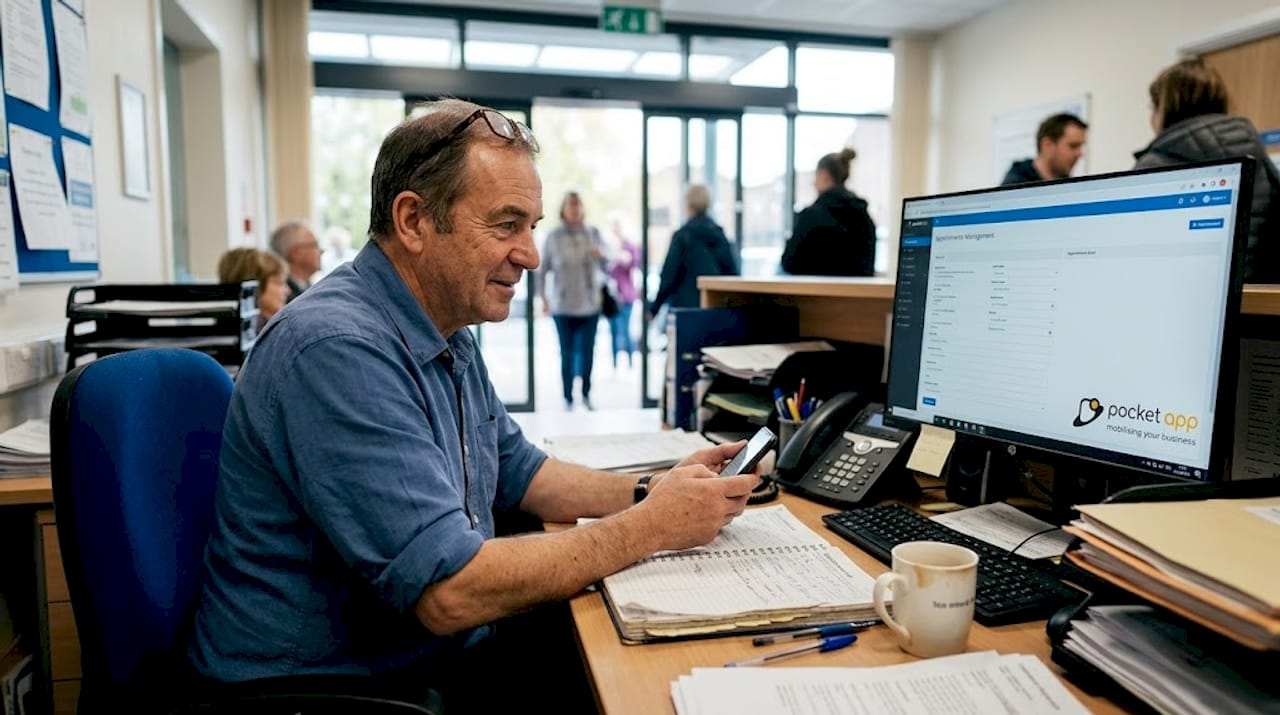
Apps that integrate with existing GP systems allow patients to complete tasks that would previously have required human intervention at every step. Prescription requests flow directly into clinical systems. Appointment slots are updated in real time. Patients receive automated confirmations without a receptionist lifting the phone.
The downstream benefits compound quickly:
- Reduced inbound call volume to GP practices, freeing staff for complex queries
- Fewer missed appointments through automated reminders
- Faster prescription turnaround without manual data re-entry
- Improved data accuracy as patients update their own demographic information
- Better audit trails for clinical governance purposes
"Record numbers are now using the NHS App to manage their health, demonstrating that patient self-service at scale is achievable when the infrastructure supports it." NHS England, 2025
However, the evidence also cautions against assuming that the technology alone is sufficient. NHS App usage frees clinicians' time but requires genuine organisational support for adoption to be sustained. Practices that introduced app champions, communicated actively with patients, and trained staff saw significantly higher and more durable uptake than those that simply switched on the functionality.
The lesson here connects directly to app-powered efficiency: the app is the enabler, but organisational culture is the driver. For hospital administrators considering mobile business app examples, this distinction shapes whether a project delivers its promised ROI or quietly underperforms.
Pro Tip: Before procurement, map every workflow the app is intended to change. Involve clinical and administrative staff early. The practices that fail to do this consistently report lower adoption rates and higher rework costs after go-live.
Equity, inclusivity, and the digital divide
The most uncomfortable question in UK healthcare app deployment is not whether the technology works. It is: for whom does it work, and who gets left behind?
The data here demands attention. 6% of UK adults lack basic digital skills, and 33% of those over 75 never use the internet. These are precisely the patient groups with the highest healthcare need and the greatest potential to benefit from reduced friction in their interactions with the NHS. The paradox is stark.
Digital exclusion is not a single problem. It is a cluster of overlapping barriers:
- Device access: not everyone owns a smartphone or a reliable data connection
- Digital literacy: using a health app demands confidence that many patients simply do not have
- Language barriers: many apps offer limited multilingual support
- Disability: visual impairments, motor difficulties, and cognitive conditions all affect usability
- Socioeconomic deprivation: often correlates with lower smartphone ownership and broadband access
"NHS App features are not universally available, and hybrid models combining digital and non-digital access are essential to avoid creating a two-tier health service." BMC Medicine, 2024
The risk of a two-tier system is real and documented. If the patients who can use the app get faster, more convenient care, while those who cannot are funnelled into slower, higher-friction channels, health inequalities widen rather than narrow.
A sound app accessibility strategy addresses these barriers at the design stage, not as an afterthought. Building for an ageing population requires larger text, simplified navigation, and caregiver-assisted login flows. Inclusive app design means testing with users who represent the full range of your patient population, not just the digitally confident majority.
Hybrid models that retain telephone, face-to-face, and written communication channels are not a concession to failure. They are the mark of a mature, equitable digital strategy.
Why true success means bridging gaps, not just driving adoption
Having spent time reviewing both the genuine promise of healthcare apps and the very real obstacles they face, we find that one pattern stands out: organisations that measure success solely by downloads or transaction volumes consistently miss the point.
At Pocket App, we have seen how top-down rollouts with impressive headline numbers can quietly fail the patients who need support most. A trust that processes five million app transactions annually but has inadvertently made its telephone service harder to reach has not improved care. It has redistributed it.
The apps that generate lasting, equitable impact share a common feature: they are built on continuous feedback rather than one-off launches. Clinical teams, patient groups, and administrative staff all contribute to iterative improvement cycles. Legal accessibility imperatives are treated as a floor, not a ceiling.
True success means measuring outcomes that matter: reduced missed appointments in deprived postcodes, improved medication adherence among elderly patients, shorter wait times felt across the whole patient population. Downloads are an input. Outcomes are the goal.
How to take the next step in healthcare app development
Building a healthcare app that genuinely serves your patient population, integrates cleanly with clinical systems, and meets the accessibility bar demanded by NHS standards is a significant undertaking. It requires more than good intentions.
At Pocket App, we bring over 300 completed projects and deep experience in regulated, patient-facing digital products to every engagement. Our work spans mobile app development for NHS-adjacent organisations, self-service portals, and accessibility-first design. Browse our business app examples to see the breadth of what is possible, or explore our app design solutions to understand how we approach user experience in high-stakes environments. If you are ready to move from ambition to action, get in touch and let us explore what the right app could do for your organisation.
Frequently asked questions
What are the main features of the NHS App for patients?
The NHS App allows patients to book and cancel GP appointments, order repeat prescriptions, and access medical records and test results securely. It also provides access to the 111 online triage service and organ donation registration.
How do mobile healthcare apps improve staff efficiency?
Apps reduce administrative burden by enabling patient self-service for routine tasks, meaning staff spend less time on inbound calls and manual data entry. Patient self-service at scale frees clinicians and receptionists to focus on more complex, high-value interactions.
Who is most at risk of missing out as healthcare apps expand?
Elderly adults, people with low digital literacy, and those living in socioeconomic deprivation face the highest barriers to app access. 33% of those over 75 never use the internet, making inclusive design and hybrid access models essential.
Is behaviour change from health apps like Active 10 sustained?
Yes. Evidence shows that Active 10 users maintained increases in brisk walking above baseline with continued app use, suggesting that well-designed behaviour change tools can deliver durable results rather than short-term novelty.