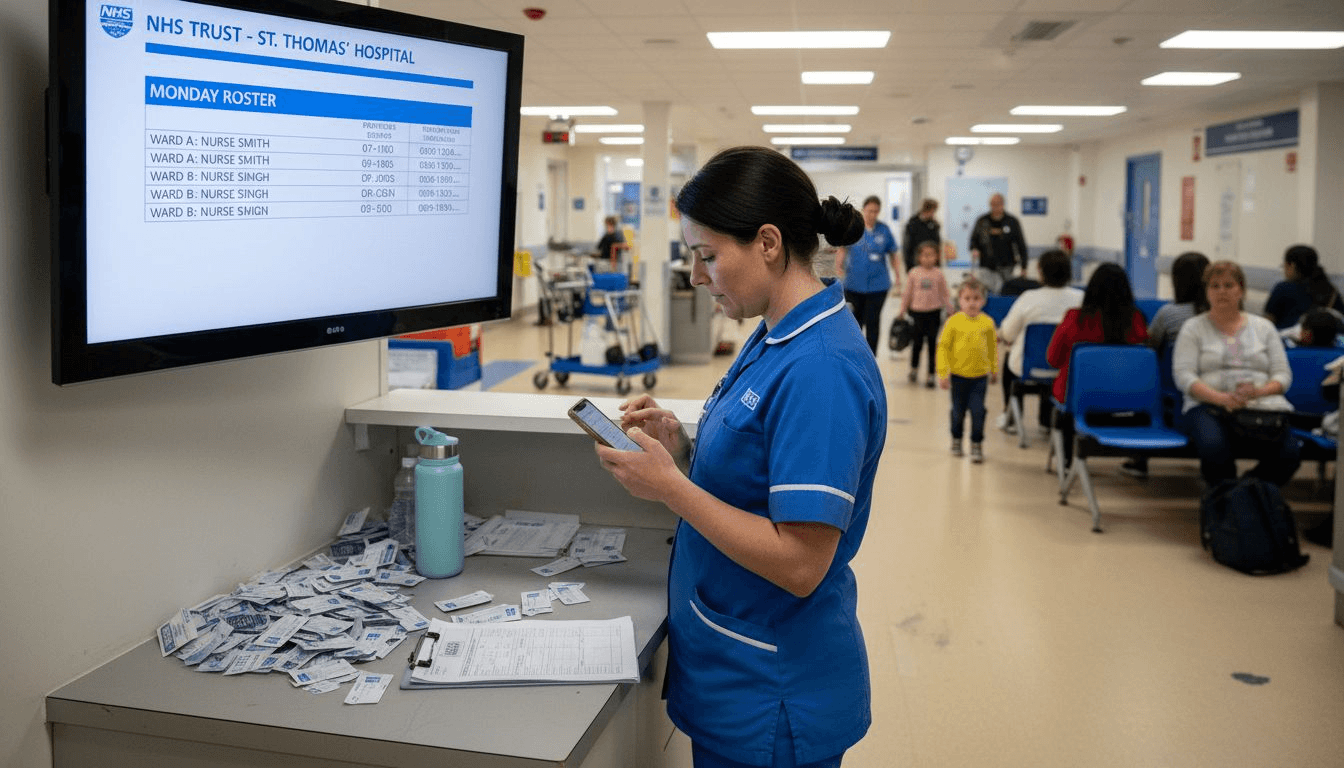
Operations managers in UK retail and healthcare face mounting pressures: fragmented communication causes costly delays, staff shortages limit responsiveness, and rising demand strains existing workflows. Manual processes no longer suffice. Mobile apps offer a practical solution, transforming operational challenges in UK retail and healthcare into opportunities for streamlined workflows, real-time data access, and measurable efficiency gains. This guide explores how mobile technology delivers tangible operational improvements across both sectors.
Table of Contents
- The operational challenges in UK retail and healthcare
- How mobile apps enhance operational efficiency in healthcare
- How mobile apps enhance operational efficiency in retail
- Common misconceptions about mobile apps and operational efficiency
- Framework for evaluating mobile app benefits in operational efficiency
- Practical steps for implementing mobile apps to maximise efficiency
- Conclusion: Unlocking operational excellence with mobile apps
- How Pocket App can help you boost operational efficiency
- Frequently asked questions
Key takeaways
| Point | Details |
|---|---|
| Real-time access | Mobile apps enable instant data retrieval and workflow coordination across teams. |
| Healthcare benefits | Apps reduce administrative burden by 20% whilst improving patient care coordination. |
| Retail advantages | Apps drive inventory optimisation and personalised marketing, powering over 70% of UK online sales. |
| Common myths | Many underestimate operational benefits, wrongly viewing apps as customer-only tools. |
| Implementation framework | Clear evaluation criteria and structured deployment ensure maximum efficiency gains. |
The operational challenges in UK retail and healthcare
Fragmented communication systems create information bottlenecks that delay critical decisions. When staff rely on phone calls, emails, and paper records, errors multiply and response times suffer.
Staff shortages amplify these pressures. Healthcare workers juggle administrative tasks alongside patient care, whilst retail teams struggle to manage inventory, sales, and customer service simultaneously. The digital transformation in UK retail and NHS has become essential rather than optional.
Rising demand adds complexity. Healthcare services face increasing patient volumes whilst retail businesses navigate omnichannel customer expectations. Existing workflows lack the real-time data integration needed to respond effectively.
Key operational pain points include:
- Delayed access to critical information causing missed opportunities and errors
- Manual data entry consuming valuable staff time and introducing inaccuracies
- Poor coordination between departments and locations hampering service delivery
- Limited visibility into real-time operations preventing proactive decision making
- Outdated systems unable to scale with growing organisational needs
These challenges demand practical solutions that enhance efficiency without overwhelming already stretched teams. Mobile apps address these pain points directly by streamlining workflows and enabling instant access to essential data.
How mobile apps enhance operational efficiency in healthcare
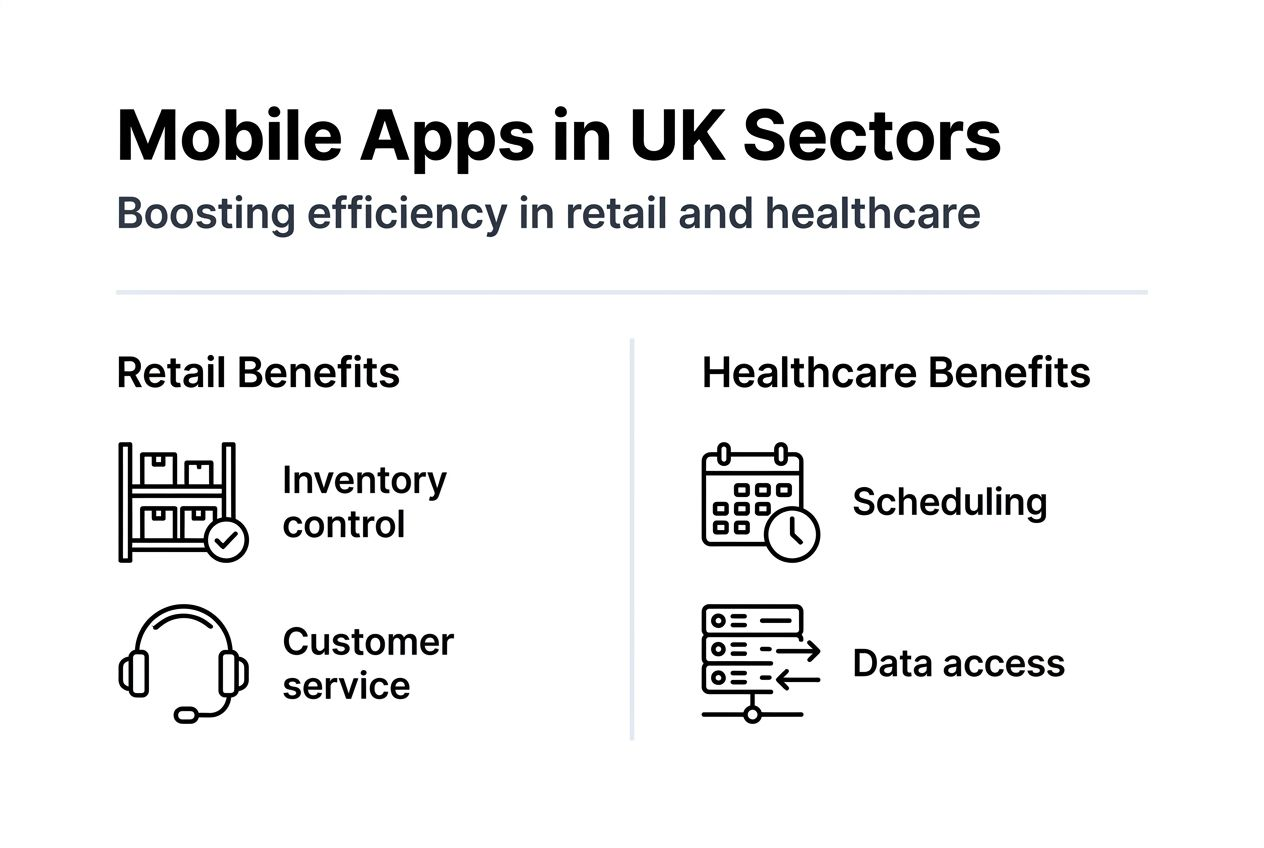
Mobile apps transform healthcare operations by reducing administrative workload and improving care coordination. Remote patient monitoring allows clinicians to track vital signs and intervene early, preventing complications that require costly emergency care.
The NHS App's usage reduces administrative queries by 20% whilst integrating patient data across multiple trusts. This unified view eliminates duplicate data entry and speeds up clinical decision making.
Simplified appointment booking saves reception staff hours daily. Patients schedule visits directly through apps whilst clinicians access medical records instantly at the point of care. The NHS App integrates referrals and appointment data from 88 trusts, reducing coordination time significantly.
Staff scheduling apps improve workforce coordination. Managers fill shifts faster, view team availability in real time, and communicate schedule changes instantly. This flexibility proves invaluable during staff shortages.
Patient engagement tools deliver measurable benefits. Medication reminder notifications improve compliance, reducing hospital readmissions. Pre-appointment questionnaires collect information beforehand, allowing clinicians to focus consultation time on treatment rather than data gathering.
Key healthcare efficiency gains:
- Automated appointment reminders reducing no-show rates by up to 30%
- Digital patient records accessible within seconds instead of minutes
- Secure messaging between care teams eliminating phone tag delays
- Remote monitoring reducing unnecessary in-person visits
- Electronic prescriptions sent directly to pharmacies saving processing time
Pro Tip: Prioritise integration with existing NHS systems during app selection to ensure seamless data flow and avoid creating new information silos.
These improvements free healthcare staff to focus on critical care tasks rather than administrative work. The result is better patient outcomes alongside enhanced operational efficiency. Learn more about mobile apps in healthcare operations and real-time data insights in healthcare.
How mobile apps enhance operational efficiency in retail
Retail mobile apps create always-available digital storefronts that extend beyond physical shop hours. Mobile commerce drives over 70% of UK online sales, transforming how customers browse and purchase whilst generating valuable operational data.
Real-time inventory tracking prevents costly stockouts and overstock situations. Staff check product availability instantly using mobile devices, fulfilling orders faster and reducing customer disappointment. Automated alerts notify managers when stock reaches reorder thresholds, streamlining supply chain operations.

Personalised marketing capabilities boost conversion rates measurably. Push notifications increase conversion rates by up to 15% by delivering targeted offers based on customer preferences and purchase history. This precision eliminates wasteful broad marketing campaigns.
Streamlined workforce communication enhances task management. Floor staff receive instant notifications about price changes, promotional updates, and inventory movements. Managers assign tasks digitally and track completion rates in real time, improving accountability.
Apps accelerate customer service delivery. Staff access product information, check competitor pricing, and process transactions from anywhere in the shop. Mobile point-of-sale systems reduce queue times whilst capturing customer data for future marketing.
Over 70% of UK online retail sales now occur through mobile apps, highlighting their dominance as digital storefronts and operational tools.
Key retail efficiency improvements:
- Instant inventory visibility across all locations reducing search time
- Automated reordering preventing stockouts and optimising cash flow
- Digital loyalty programmes reducing manual card management overhead
- Click-and-collect services improving fulfilment speed and customer convenience
- Staff productivity dashboards identifying training needs and performance gaps
Mobile apps eliminate slow manual processes that frustrate both customers and staff. The operational benefits extend beyond customer-facing improvements to back-office efficiency gains. Explore mobile apps in retail operations and real-time inventory and sales data capabilities.
Common misconceptions about mobile apps and operational efficiency
Many operations managers wrongly believe mobile apps only improve customer engagement rather than internal efficiency. This myth overlooks how apps automate routine tasks, reducing workload for staff. Healthcare apps handle appointment scheduling automatically whilst retail apps process inventory updates without manual data entry.
Another misconception suggests mobile app implementation requires excessive time and budget. UK firms regularly deploy sector-specific apps within months, achieving return on investment through reduced labour costs and error prevention. The perceived complexity often stems from outdated experiences with legacy systems.
Some managers view operational benefits as too intangible to measure. Evidence contradicts this belief: the NHS App demonstrates quantifiable 20% reductions in administrative queries. Retail apps provide detailed analytics showing precise improvements in fulfilment speed and inventory accuracy.
A persistent myth claims apps replace human workers rather than supporting them. Apps actually augment staff capabilities, handling repetitive tasks so employees can focus on complex problem-solving and customer interaction. This collaboration between technology and people drives true efficiency gains.
Key misconceptions debunked:
- Apps are customer-only tools: Apps automate internal workflows, schedule staff, and streamline interdepartmental communication effectively.
- Implementation is prohibitively expensive: Many UK organisations see positive ROI within the first year through labour savings and error reduction.
- Benefits cannot be measured: Specific metrics like processing time, error rates, and staff productivity provide clear evidence of improvements.
- Apps eliminate jobs: Technology enhances human capabilities rather than replacing workers, allowing staff to handle higher-value activities.
- One-size-fits-all solutions work: Generic apps fail to address sector-specific needs; customisation drives maximum efficiency gains.
Pro Tip: Evaluate vendor claims carefully by requesting case studies with measurable outcomes from similar organisations in your sector.
Understanding these realities helps operations managers make informed decisions about mobile app investments. Avoiding these misconceptions accelerates successful implementation. Review myths about mobile apps and operational efficiency and correcting mobile app misconceptions for deeper insights.
Framework for evaluating mobile app benefits in operational efficiency
A structured evaluation framework helps operations managers select mobile apps that deliver genuine efficiency improvements. Start by defining key performance metrics aligned with your operational goals. Healthcare managers might track administrative time savings and patient satisfaction scores, whilst retail managers measure inventory accuracy and fulfilment speed.
Prioritise sector-specific features that address your unique challenges. Healthcare apps require secure patient data handling and appointment integration, whilst retail apps need robust inventory tracking and customer analytics. Generic solutions rarely deliver maximum value.
Balance customisation benefits against implementation complexity. Bespoke features solve specific problems but may increase development time and costs. Evaluate whether configurable off-the-shelf solutions meet your needs before pursuing full custom development.
Scalability and integration capabilities determine long-term value. Apps must connect seamlessly with existing systems like electronic health records or point-of-sale platforms. Future-proof investments by ensuring apps can grow with your organisation.
| Feature | NHS App Example | Retail Inventory App Example |
|---|---|---|
| Primary function | Patient appointment booking and medical record access | Real-time stock tracking across locations |
| Integration | Connects with 88 NHS trusts and GP systems | Links with POS, warehouse management, and supplier systems |
| Scalability | Handles millions of users nationwide | Supports single-location to multi-site operations |
| Key efficiency gain | 20% reduction in administrative queries | Prevents stockouts through automated reordering |
| Customisation level | Standardised with trust-specific configurations | Highly customisable for brand-specific workflows |
Essential evaluation criteria:
- Clear alignment between app capabilities and identified operational bottlenecks
- Documented evidence of efficiency improvements from similar organisations
- Vendor reputation for ongoing support and regular feature updates
- User-friendly interface requiring minimal training time
- Compliance with relevant data protection and industry regulations
- Total cost of ownership including licensing, maintenance, and training
Apply this framework systematically when reviewing potential solutions. Request demonstrations using your actual workflows and data scenarios. The app evaluation framework provides additional guidance for thorough assessment.
Practical steps for implementing mobile apps to maximise efficiency
Successful implementation begins with comprehensive stakeholder needs analysis. Interview frontline staff to understand daily workflow challenges and identify specific pain points. Their insights reveal practical requirements that management might overlook.
Select or customise apps targeting your sector's operational bottlenecks. Healthcare organisations should prioritise patient data integration and clinical workflow support, whilst retail businesses need inventory visibility and customer engagement features. Avoid feature-bloated solutions that complicate rather than streamline operations.
Implement thorough staff training and change management plans. Resistance to new technology often stems from inadequate preparation rather than the technology itself. Provide hands-on training sessions, create quick-reference guides, and designate super-users who can support colleagues.
Establish continuous monitoring and feedback loops for iterative improvement. Track the performance metrics defined during evaluation and gather regular user feedback. Make incremental adjustments based on actual usage patterns rather than assumptions.
Concrete implementation steps:
- Conduct discovery workshops: Engage staff across departments to map current workflows, identify inefficiencies, and define success criteria for the mobile app solution.
- Run pilot programmes: Deploy apps to a small user group first, gathering feedback and refining processes before organisation-wide rollout.
- Create change champions: Train enthusiastic early adopters who can demonstrate benefits and provide peer support during broader implementation.
- Measure and communicate wins: Share specific efficiency improvements with all stakeholders, building momentum and justifying continued investment in mobile solutions.
Pro Tip: Secure early staff buy-in by involving frontline employees in app selection and piloting, turning potential resisters into enthusiastic advocates.
Successful deployment requires ongoing attention beyond initial launch. Regular reviews identify opportunities for additional features or workflow refinements. Explore practical mobile app implementation steps and effective app implementation strategies for detailed guidance.
Conclusion: Unlocking operational excellence with mobile apps
Mobile apps deliver measurable operational improvements across UK retail and healthcare sectors. They streamline workflows through real-time data access, reduce administrative workload through automation, and enhance service quality through better coordination. The evidence is clear: organisations deploying sector-specific mobile solutions achieve quantifiable efficiency gains within months.
Emerging innovations in artificial intelligence and machine learning will further amplify these benefits. Predictive analytics will help healthcare providers anticipate patient needs whilst enabling retailers to optimise inventory with greater precision. Voice interfaces and augmented reality features promise to make mobile apps even more intuitive for frontline staff.
Operations managers who embrace mobile technology position their organisations for sustained competitive advantage in 2026 and beyond. The transformation from manual processes to digital workflows is no longer optional; it has become essential for meeting rising demands with constrained resources.
Partner with specialists who understand your sector's unique challenges. Expert mobile app development tailored to retail and healthcare operations delivers faster deployment and higher success rates than generic solutions. Start your journey towards operational excellence with mobile apps today.
How Pocket App can help you boost operational efficiency
Operations managers across UK retail and healthcare trust Pocket App to develop tailored mobile solutions that directly address their efficiency challenges. We specialise in custom mobile app development that integrates seamlessly with existing systems, ensuring rapid deployment and measurable return on investment.
Our team has delivered over 300 projects across diverse sectors, giving us deep expertise in the specific operational requirements of retail and healthcare organisations. We guide you through common implementation challenges with comprehensive support and training that ensures staff adoption and sustained benefits.
Whether you need patient coordination tools for healthcare settings or inventory optimisation for retail operations, our mobile apps for operational efficiency transform daily workflows. Our workforce mobile enablement solutions empower your teams to work smarter, not harder. Partner with Pocket App to unlock operational excellence in 2026.
Frequently asked questions
What are the primary operational benefits of mobile apps in healthcare?
Mobile apps improve appointment scheduling efficiency, reduce administrative workload by up to 20%, and enable remote patient monitoring that prevents complications. They help clinicians access comprehensive patient data promptly, eliminating delays caused by fragmented paper records or separate computer systems.
How do mobile apps improve inventory management in retail?
Apps enable real-time inventory tracking across all locations, reducing both stockouts that lose sales and overstock that ties up capital. Automated order management improves supply chain efficiency by triggering reorders when stock reaches predetermined thresholds, eliminating manual monitoring overhead.
What are common mistakes to avoid when implementing operational mobile apps?
Avoid selecting generic apps not tailored to your sector's specific operational needs, as they rarely deliver maximum efficiency gains. Ensure thorough staff training and stakeholder engagement from the start, and prioritise compliance with data privacy regulations like GDPR to prevent costly security breaches.
How quickly can operations managers expect to see efficiency gains after deploying a mobile app?
Many UK businesses observe measurable benefits within three to six months post-deployment, particularly when apps are customised for sector-specific workflows. Rapid gains are achieved when implementation includes comprehensive staff training and the app integrates smoothly with existing systems rather than creating new silos.
Recommended
- Pocket App | How mobile apps create better business practices
- Pocket App | How enterprises can optimise mobile apps for millennials
- Pocket App | How to Maximize Your Teams Productivity Through Mobile Apps
- Pocket App | Webinar: How Brands and Enterprises are improving efficiency and employee communication with mobile apps.