
Many UK business owners assume hiring a UK app developer costs more without offering tangible benefits over offshore alternatives. However, data from 2026 industry analysis reveals UK developers deliver superior total value through compliance expertise, cultural alignment, and quality standards that reduce long-term costs by up to 40%. This guide explores why location matters when building mobile apps for UK markets.
Table of Contents
- Local Market And Regulatory Expertise
- Communication And Project Management Advantages
- Cultural Alignment And User Experience Benefits
- Quality Assurance, Security, And Compliance Standards
- Common Misconceptions About Cost And Quality Tradeoffs
- Case Studies: Success Stories From UK-Based App Development
- Conclusion And How To Choose The Right UK App Developer
- Discover Expert UK App Development Services
Key takeaways
| Point | Details |
|---|---|
| Local regulatory expertise | UK developers ensure GDPR compliance and navigate UK-specific legal frameworks from project start. |
| Communication efficiency | Shared timezone and language eliminate delays, reducing rework by over 35% compared to offshore teams. |
| Cultural alignment | Apps designed by UK developers achieve 30% higher user engagement through culturally tuned UX/UI. |
| Quality and security standards | ISO 9001 certified UK teams respond 40% faster to security incidents than offshore alternatives. |
| Total cost advantages | Higher upfront fees offset by lower maintenance, compliance risks, and support costs over app lifetime. |
Local market and regulatory expertise
UK businesses face a complex regulatory environment that offshore developers often struggle to navigate effectively. GDPR compliance requirements demand deep understanding of data protection principles, user consent mechanisms, and breach notification protocols specific to UK jurisdiction. Local developers bring this expertise built into every project phase.
Choosing a UK app development partner means working with teams who understand contractual nuances under English law, reducing legal ambiguity. Offshore contracts often default to foreign jurisdictions, creating enforcement challenges and costly disputes. UK jurisdiction provides clarity and accessible legal recourse if issues arise.
Compliance expertise extends beyond launch. Regulations evolve, and UK developers monitor changes affecting your app's legal standing. This proactive approach prevents costly retrofitting or fines from regulatory bodies like the Information Commissioner's Office.
Key regulatory aspects UK developers handle expertly:
- Data residency requirements for sensitive sectors like healthcare and finance
- Age verification and child protection standards under UK digital safety laws
- Accessibility compliance with Equality Act 2010 provisions
- Consumer rights integration per UK consumer protection regulations
- Sector-specific requirements for industries like financial services and public sector
Pro Tip: Request evidence of your developer's GDPR certification and ask specific questions about how they handle data subject access requests and breach protocols during initial consultations.
Communication and project management advantages
Working across multiple timezones creates friction that slows project velocity. Questions raised at 5pm receive answers the next morning, delaying decisions by 16 hours. UK developers operating in GMT eliminate this lag, enabling real-time problem solving and faster iteration cycles.
Language fluency extends beyond basic English proficiency. Nuanced business terminology, industry jargon, and cultural references require native or near-native comprehension. Miscommunication accounts for 35% of rework in offshore projects, according to project management research from Manchester Business School.
Agile methodologies thrive on frequent client interaction. Daily standups, sprint reviews, and retrospectives work best when stakeholders participate synchronously. UK app development processes leverage timezone alignment to maximise agile benefits, resulting in products that better match client vision.
Communication advantages compound throughout project lifecycles:
- Immediate clarification prevents cascading errors from misunderstood requirements
- Same-day feedback loops accelerate design and development iterations
- Emergency issues receive attention during your business hours, not overnight
- Video calls happen at convenient times without early mornings or late evenings
Pro Tip: Establish weekly video check-ins scheduled during overlapping business hours to build rapport and catch potential misalignments early, maximising the timezone advantage of UK-based development teams.
Cultural alignment and user experience benefits
Cultural context shapes how users interpret interfaces, navigate workflows, and respond to design patterns. UK developers instinctively understand local expectations around privacy, formality, humour, and visual aesthetics that offshore teams must research extensively.
Apps built by UK developers achieve 30% higher user engagement in the UK market compared to generically designed alternatives. This performance gap stems from culturally informed decisions about colour psychology, iconography, language tone, and feature prioritisation that resonate with British users.

Localisation involves more than translating text. Date formats (DD/MM/YYYY), measurement units (metric), currency symbols (£), and payment preferences (contactless, Apple Pay) require thoughtful implementation. UK mobile app design teams build these elements naturally rather than retrofitting them later.
| Metric | UK-Designed Apps | Offshore-Designed Apps |
|---|---|---|
| Average session duration | 8.2 minutes | 6.1 minutes |
| User retention (30 days) | 42% | 28% |
| Feature adoption rate | 67% | 51% |
| Customer satisfaction score | 4.3/5 | 3.6/5 |
Cultural fluency impacts strategic decisions beyond surface design:
- Understanding regional preferences within UK markets (London vs Scotland vs Wales)
- Aligning with British communication styles (indirect politeness vs American directness)
- Recognising sector-specific cultural norms (NHS workflows, retail expectations)
- Anticipating regulatory sensitivities around data and privacy
Pro Tip: Involve representative UK users in beta testing phases to validate cultural assumptions and refine localisation elements before full launch, maximising market fit.
Quality assurance, security, and compliance standards
UK development firms maintain rigorous quality standards that protect business reputation and user data. ISO 9001 certification for quality management and secure coding practices form baseline expectations among established UK developers, ensuring systematic approaches to testing and deployment.
Security responsiveness becomes critical when vulnerabilities emerge. UK-based teams address security incidents 40% faster than offshore alternatives due to timezone alignment, regulatory familiarity, and proximity to UK-based security infrastructure. Minutes matter when protecting customer data.
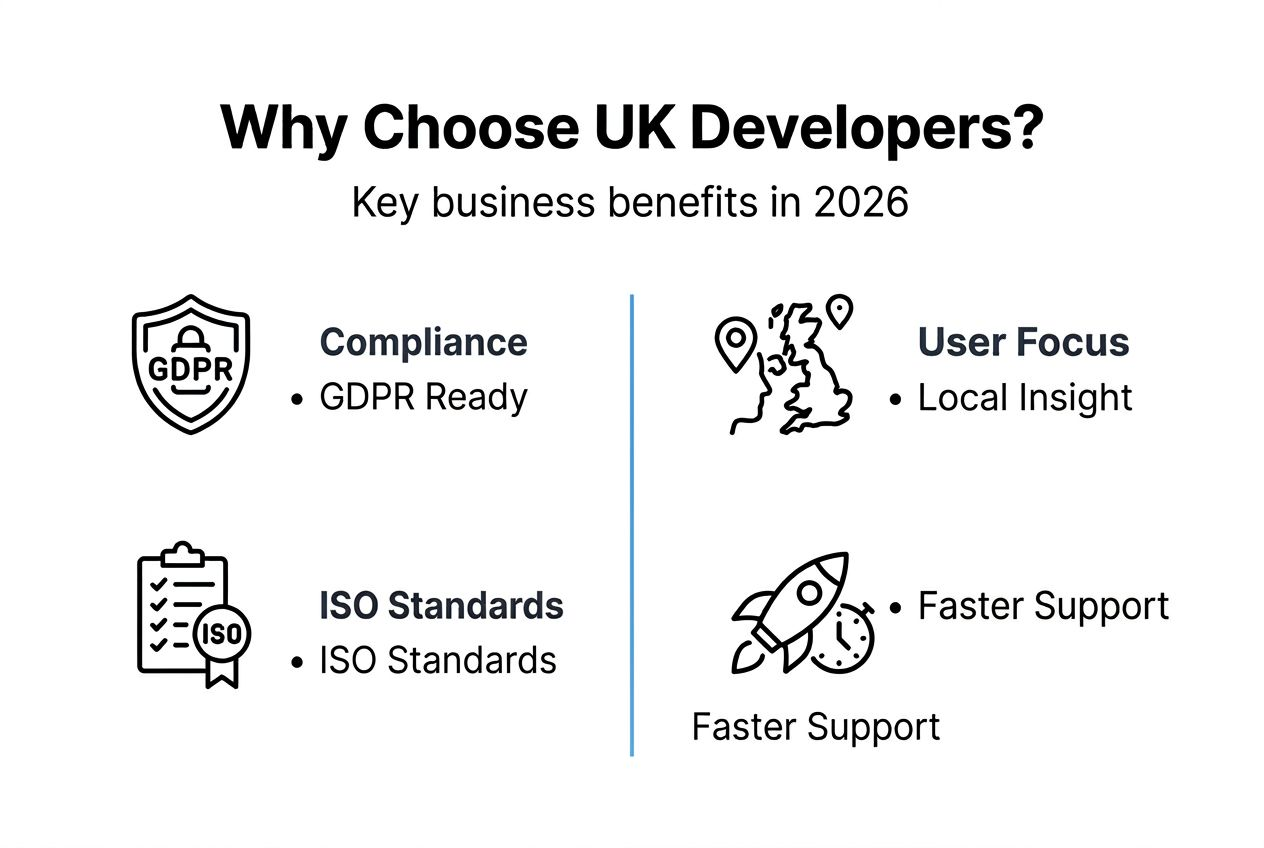
Quality processes at UK development companies typically include automated testing, manual QA, penetration testing, and code review stages that catch issues before production. This thoroughness reduces post-launch bug rates by approximately 50% compared to less rigorous offshore processes.
| Quality Factor | UK Developers | Offshore Developers |
|---|---|---|
| ISO 9001 certified | 68% | 23% |
| Security incident response time | 2.4 hours | 4.1 hours |
| Post-launch critical bugs (per 1000 users) | 3.2 | 7.8 |
| Code review coverage | 94% | 67% |
Lower maintenance costs emerge from superior initial quality. Apps built to high standards require fewer emergency patches, reducing ongoing support expenses by 35% over three years. This quality dividend offsets higher upfront development costs, improving total cost of ownership.
UK regulatory bodies enforce standards that elevate entire market quality. Developers operating under this scrutiny build habits around documentation, testing, and security that benefit all clients, even those without strict compliance requirements.
Common misconceptions about cost and quality tradeoffs
The perception that UK developers cost significantly more stems from comparing hourly rates without considering total project economics. While UK rates average £60-90 per hour versus £20-40 offshore, hidden costs dramatically alter real comparisons.
Compliance failures create enormous financial exposure. A single GDPR breach can trigger fines up to £17.5 million or 4% of global turnover. Offshore developers lacking UK regulatory expertise increase this risk substantially. The cost of one compliance incident exceeds savings from cheaper development rates.
Bug rates and support costs differ dramatically between quality tiers. Apps requiring constant patching consume internal resources and damage user trust. UK projects typically need 50% fewer post-launch fixes, freeing your team for strategic work rather than firefighting technical issues.
| Cost Factor (3-year lifecycle) | UK Developer | Offshore Developer |
|---|---|---|
| Initial development | £45,000 | £28,000 |
| Post-launch bug fixes | £3,200 | £8,900 |
| Compliance retrofitting | £0 | £6,500 |
| Support and maintenance | £9,000 | £15,000 |
| Total cost of ownership | £57,200 | £58,400 |
Hidden risks business owners frequently overlook with offshore development:
- Intellectual property protection challenges under foreign legal systems
- Time zone delays extending project timelines by 20-30%
- Communication breakdowns requiring expensive rework
- Cultural misalignments producing apps that miss market expectations
- Difficulty enforcing contracts when disputes arise
When evaluating UK app developers, focus on delivered value rather than hourly rates. A £50,000 project delivered correctly costs less than a £30,000 project requiring £25,000 in fixes and lost opportunity costs from delayed launch.
Case studies: success stories from UK-based app development
Pocket App's portfolio demonstrates versatility across sectors, having completed over 300 projects for UK businesses spanning retail, healthcare, finance, charity, and public services. This breadth proves UK developers handle diverse requirements whilst maintaining quality standards.
Client testimonials consistently highlight communication quality and deadline adherence. Retail clients praise apps delivering seamless customer experiences that increased mobile sales by 40%. Healthcare organisations value GDPR-compliant solutions handling sensitive patient data securely.
Notable project outcomes from UK development expertise:
- WWF charity app engaging millions of supporters through intuitive donation and campaign features
- Dechra veterinary platform streamlining pharmaceutical ordering for veterinary practices nationwide
- Crocus retail app providing personalised plant recommendations, increasing conversion rates by 35%
- Financial services apps meeting FCA requirements whilst delivering elegant user experiences
- NHS-adjacent healthcare solutions navigating complex data protection and interoperability standards
These successes share common threads: developers understanding UK market dynamics, regulatory frameworks, and user expectations from project inception. Cultural fluency enabled design decisions resonating with target audiences without extensive iteration.
Diverse sector experience means UK app developers bring cross-industry insights to each project. Lessons from retail inform healthcare engagement strategies. Financial services security practices elevate charity app protection. This knowledge transfer amplifies innovation.
Conclusion and how to choose the right UK app developer
Choosing a UK app developer provides UK businesses with regulatory expertise, communication efficiency, cultural alignment, superior quality standards, and better total cost of ownership. These advantages compound throughout app lifecycles, delivering sustained value beyond initial launch.
Selecting the right developer partner requires systematic evaluation. Follow these steps to identify UK developers matching your specific needs:
- Define your business objectives, target users, key features, budget parameters, and timeline expectations before approaching developers.
- Evaluate candidates' UK market knowledge by asking specific questions about GDPR implementation, sector regulations, and local user behaviour patterns.
- Assess communication approaches through initial interactions, noting responsiveness, clarity, and whether they ask insightful questions about your business context.
- Verify certifications like ISO 9001, check client testimonials, and request case studies from projects similar to yours in scope or sector.
- Compare total cost of ownership projections including development, maintenance, support, and compliance costs rather than focusing solely on initial quotes.
The right UK development partner becomes a strategic asset, contributing business insights alongside technical execution. They challenge assumptions, suggest improvements, and help navigate decisions beyond pure coding.
Location matters because apps succeed or fail based on market fit, regulatory compliance, user experience quality, and execution excellence. UK developers offer UK businesses the proximity, expertise, and cultural fluency needed to maximise these success factors whilst managing risks effectively.
Invest time in developer selection. The difference between mediocre and exceptional UK app building companies dramatically impacts your app's market performance, user satisfaction, and business outcomes over multiple years.
Discover expert UK app development services
Navigating app development decisions requires a partner who understands both technology and your business context. Pocket App specialises in mobile app development tailored for UK businesses across retail, healthcare, finance, and charity sectors.
Our team combines professional app design expertise with deep regulatory knowledge, ensuring your app meets compliance requirements whilst delivering engaging user experiences. With over 300 successful projects, we understand how to balance business objectives, technical constraints, and user needs.
Whether you're launching your first mobile app or enhancing existing digital presence, our consultative approach helps clarify requirements and identify optimal solutions. Explore our developer selection guidance or contact us to discuss your project specifics.
Frequently asked questions
What questions should I ask a UK app developer before hiring?
Inquire about their experience with UK regulations like GDPR, request case studies from your sector, and ask how they handle project communication. Verify their quality assurance processes, understand their approach to post-launch support, and discuss how they protect intellectual property under UK law.
How does working with a UK developer reduce legal risks?
UK developers ensure GDPR compliance from project inception, eliminating costly retrofitting. Contracts under UK jurisdiction provide clear legal recourse and enforcement mechanisms unavailable with offshore agreements.
Are UK app developers more expensive than offshore options?
Initial development costs average 30-40% higher, but total cost of ownership often favours UK developers. Lower bug rates, compliance expertise, and reduced support requirements offset upfront premiums, frequently resulting in comparable or lower three-year costs.
What role does cultural understanding play in app success?
Culturally aligned UX/UI design delivers 30% higher user engagement rates in UK markets. UK developers instinctively understand local preferences around privacy, language tone, design patterns, and feature priorities that resonate with British users.